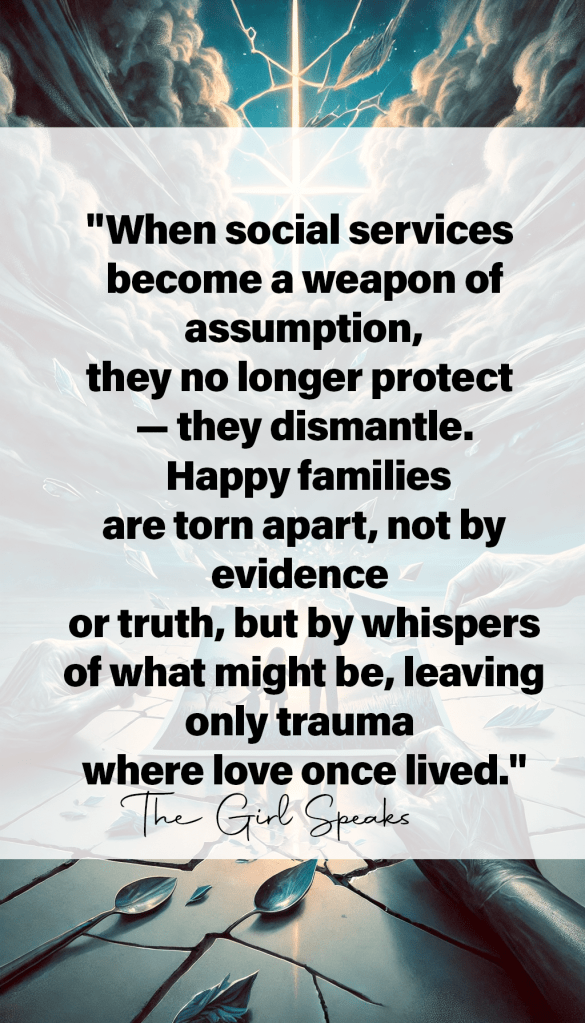
When social services operate on assumptions rather than concrete evidence, they risk dismantling the very families they’re meant to protect. Families can be torn apart not due to substantiated facts, but because of speculative concerns, leaving lasting trauma in place of once-present love.
The Scope of Family Separation in the UK
In England, approximately one in four children will require social care services by the age of 18. This statistic underscores the extensive reach of the child protection system and raises questions about its efficacy and decision-making processes.
The Guardian
Factors Contributing to Family Separation
Economic hardship plays a significant role in family separations. A survey revealed that 81% of social workers have observed an uptick in cases where poverty is a primary factor leading to child removal. This suggests that financial struggles are often misinterpreted as neglect, resulting in unnecessary interventions.
mysocialworknews.com
Consequences of Misguided Interventions
The repercussions of unwarranted family separations are profound. Children placed in care systems frequently face adverse outcomes, including emotional distress and disrupted development. Moreover, the process of removal itself can inflict deep psychological wounds on both children and parents.
A Call for Evidence-Based Practices
It’s imperative that social services prioritize evidence over assumptions. Decisions impacting family unity should be grounded in thorough investigations and factual information. By adopting such an approach, the system can better fulfill its mandate to protect vulnerable children without causing unnecessary harm to families.
The Guardian
In conclusion, while the intention of social services is to safeguard children, reliance on unverified assumptions can lead to the unintended consequence of breaking families apart. A commitment to evidence-based practices is essential to ensure that interventions truly serve the best interests of children and their families.