
I’ve been thinking a lot recently about the moment children begin asking questions about things adults once hoped they might not notice.
There is a moment that arrives quietly for many parents living alongside the family court or social care system. It does not come in the form of a meeting, a letter, or a professional discussion. Instead, it comes through a simple question from a child.
At first the question might seem ordinary, but something about it makes you pause. It carries a weight behind it, because you realise that your child is beginning to notice the things that adults have been trying to hold together quietly for a long time.
Children see far more than we often give them credit for. They notice the way conversations change when certain topics appear. They notice tension in a room even when nobody raises their voice. They notice when their lives do not quite look the same as the lives of the children around them. Over time, those observations slowly turn into questions.
For parents, those questions can be incredibly difficult to answer. Not because we want to hide the truth from our children, but because we want to protect them from carrying burdens that were never meant for them. There is a delicate balance between honesty and protection, and many parents find themselves walking that line carefully.
The systems that surround family life, social services, courts, reports, assessments – are built to make decisions about safety and welfare. Yet for the children growing up inside those systems, the experience is not something that feels procedural or administrative. It becomes part of the story of their childhood.
As children grow older, they begin to piece together fragments of that story. They hear things in passing conversations. They sense the stress adults try to hide. They begin to wonder why certain things happened the way they did, or why their lives unfolded differently from what they expected.
In those moments, parents are often left trying to explain situations that were never simple to begin with. The goal is rarely to assign blame or to revisit every detail of the past. More often, it is simply to reassure a child that they were loved, that the adults around them were trying to navigate something complicated, and that none of it changes their worth or the place they hold within their family.
What is often missing from public conversations about the family court or social care system is this quieter reality. Policies and procedures are discussed, decisions are debated, and statistics are shared, yet the everyday emotional experience of families living through these processes rarely receives the same attention.
Behind every case file there is a family continuing to live their lives. Children continue to grow, parents continue to care, and ordinary moments still happen alongside the legal and professional processes taking place around them.
Eventually, many children will begin to ask questions about the past. When they do, those conversations are rarely about systems or policies. They are about understanding their own story. For parents, that moment can feel both painful and important. It is a reminder that childhood does not pause while systems make decisions. Children continue to grow, and with that growth comes curiosity, reflection, and the natural desire to understand the experiences that shaped their lives.
Perhaps one of the most important things parents can offer in those moments is honesty wrapped in care. Not every detail needs to be shared immediately, but children deserve to know that their questions matter and that the adults in their lives are willing to listen as they try to make sense of their own story.
These conversations with our children are rarely perfect. Sometimes we pause too long, sometimes we struggle to find the right words, and sometimes we realise there may never be simple explanations for complicated seasons of life. But what matters most is that our children know they are safe to ask. That their questions are not something to fear or silence. In many ways, those questions are simply part of growing up, and part of understanding that families, like life itself, are rarely as simple as they appear from the outside.
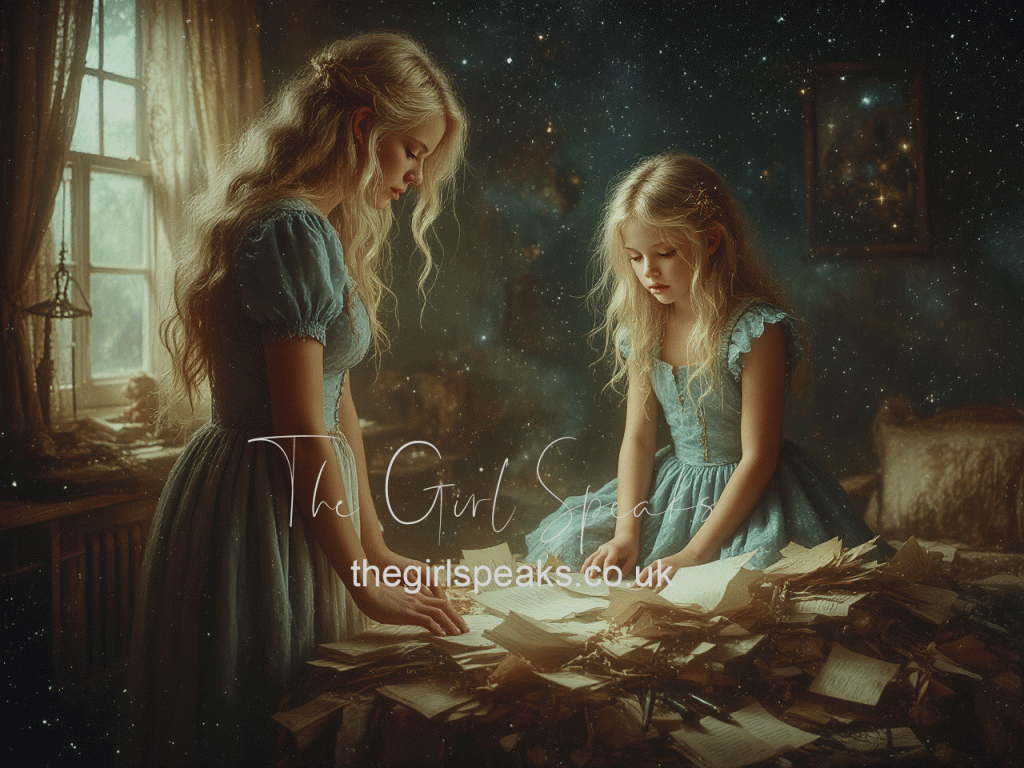
The Girl Speaks is a space for lived experiences of families navigating the UK family court and social care system.
 thegirlspeaks.uk