
In today’s digital age, it has become increasingly common for parents who have been through the family court system to turn to social media to share their stories. For some, it’s a way of processing trauma, for others a means of advocating for reform, and for many, a cry to be seen and heard in a system that often feels isolating and unjust.
But a comment I read recently made me pause:
“The issue is that many people (not all) fabricate stories to explain why their children no longer live with them or why they didn’t get the outcome they hoped for. The last thing children want is their private matters exposed on social media or open for public debate. Sharing your version of events is one thing, but it becomes harmful when it falsely implicates the other parent or disregards the children’s right to privacy…”
There is truth in this. We must acknowledge that not every story shared online is the full picture. In some cases, narratives are shaped to absolve oneself, vilify the other parent, or gain sympathy. The line between truth and perception can get blurry, especially when deep pain and unresolved emotions are involved. And most importantly, the privacy and dignity of the children must remain paramount.
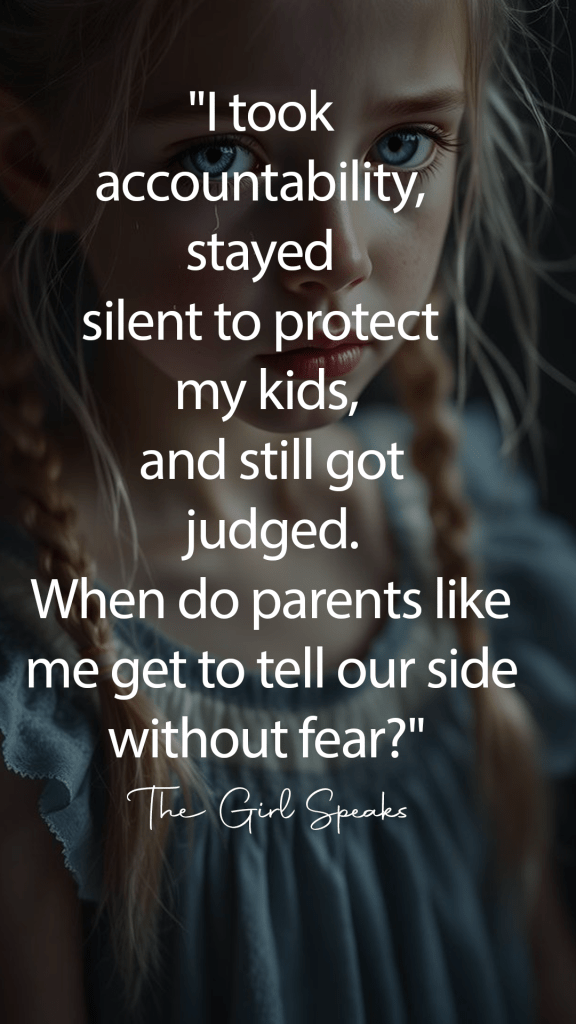
But what happens when you have taken accountability? When you’ve owned your mistakes, acknowledged your part, and still find yourself silenced or shamed for trying to tell your side?
I can say, hand on heart, I am not one of those who hides from my past. I have spoken publicly about where I went wrong. I’ve taken responsibility. And yet, when I’ve done so—when I’ve been honest about my journey—I’ve been met with trolling, hatred, or worse: silence. It’s as if genuine accountability isn’t what people want; they want someone to blame, a villain in every story, or complete silence to maintain their own comfort.
I post what I do for a reason: not just to be heard, but to give voice to the many others who message me privately with their stories—genuinely innocent or changed parents who are still being ignored or judged.
The problem is, if we follow the logic that “stories must not be told for fear of harming privacy,” then we are implying that every parent who loses custody or goes through the court system must automatically be guilty. That even after healing, even with evidence, even with growth—we’re still expected to be silent. That doesn’t feel like justice. That feels like erasure.
Let me be clear: I respect the importance of children’s privacy. Even when my children were in my care, I never posted their names or personal details online. Many people didn’t even know I had children. But there must be a balance—a way for parents to share their experiences without violating that privacy.
One thing I’ve learned: once certain legal documents and records reach 18 years, they can become publicly accessible. That will be my starting point. I have my childhood records, That’s how I will begin to fully share my journey, with no fear of crossing legal or ethical boundaries.
Because stories matter. Especially the ones that don’t fit neatly into assumptions. Especially the ones about growth, redemption, and hard truths. We need space for those too.
 thegirlspeaks.uk